BIOLOGY Volume 2 - A Guide to General Biology - 2004
12. MICROBIOLOGY AND BIOTECHNOLOGY
12.14. Biomass fuel - a new energy source
12.14.2. Ethanol
Class="center">
Brazil has been successfully producing ethanol for use as a fuel since 1975, using sugarcane as the raw material. After harvesting, the cane is crushed to extract the juice. Sucrose is extracted from the juice as a commercial product, leaving behind a syrup (molasses) that contains glucose and fructose. Molasses can be used as a feedstock for Fermentation by the Yeast Saccharomyces cerevisiae. The ethanol is then distilled to separate it from other fermentation by-products. The dry fibrous residue left over from crushing the sugarcane is used as fuel to power the distillation process.
While some Brazilian vehicles can run on pure alcohol, a small amount of petrol is typically added to the ethanol to prevent human consumption. In 1985, over 11 billion dm3 of ethanol was produced. This production was initiated in 1983 to preserve foreign currency reserves amid surging oil prices, and it has since reduced petrol consumption by 20%. In both Brazil and the USA, some automobiles operate on an alcohol-petrol blend known as gasohol (Fig. 12.24). In the USA, ethanol is produced from corn starch biomass, with output exceeding 2280 million dm3 annually by the mid-1980s.
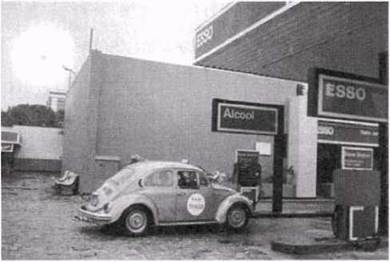
Fig. 12.24. A flex-fuel vehicle running on an ethanol-petrol blend being refueled at a gas station in Brazil.
Despite the apparent success of the Brazilian initiative, challenges remain. Ongoing debates focus on the most economically
viable use of molasses, and whether alternative crops might serve as more suitable sources of Hydrocarbons. For instance, molasses could potentially be used as a petrochemical substitute for the industrial production of plastics.
Last update: 06/08/2026
Editorial and Educational Adaptation: This material has been compiled based on the primary/original source text. The project team performed an editorial review, corrected technical inaccuracies, structured sections, and adapted the content for an educational format.
What was processed:
- elimination of formatting defects (OCR errors, structural breaks, corrupted characters);
- editorial organization of content;
- standardization of terminology in accordance with academic sources;
- verification of factual statements against the original source text.
All mentions of the author, publication year, and origin of the primary text have been preserved in accordance with the source.