Principles of Biochemistry, Volume 1 - A. Lehninger 1985
Biomolecules
Carbohydrates: Structure and Biological Functions
Monosaccharides typically contain several asymmetric centers
All Monosaccharides, with the exception of dihydroxyacetone, contain one or more asymmetric, or chiral (Sec. 3.5), carbon atoms and consequently can exist as optically active isomers. The simplest aldose, glyceraldehyde, contains only a single asymmetric center and thus can exist as two stereoisomers that are non-superimposable mirror images of each other (Sec. 5.3). Aldohexoses have four asymmetric centers and can exist as 2n = 24, i.e., 16 different stereoisomers. Among these, glucose—specifically D-glucose—is the most prevalent. Figure 11-4 illustrates the structures of all stereoisomers of D-series aldotrioses, aldotetroses, aldopentoses, and aldohexoses. They are represented using projection formulas (see Fig. 5.4), in which bonds projecting forward from the plane of the page are shown as horizontal lines, and bonds directed behind the page are shown as vertical lines (Fig. 11-5). Later, we will examine two other Methods for depicting the Spatial Structure of sugars, namely Haworth projections and conformational formulas.
Class="center">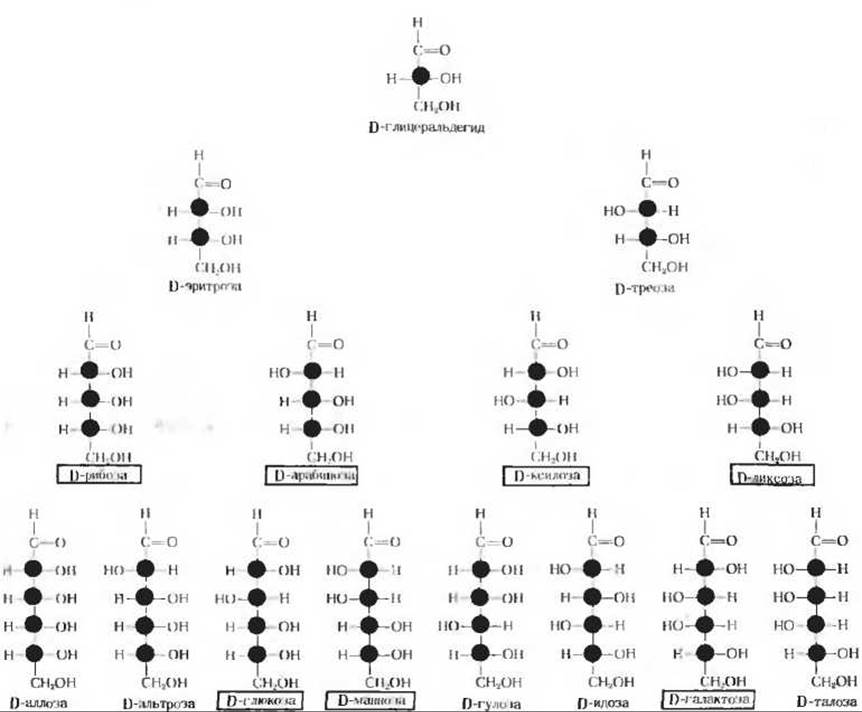
Fig. 11-4. The family of D-aldoses containing from three to six carbon atoms. Conventional structural formulas are shown, with covalent bonds represented by dashes. The names of the most common aldoses are boxed. Asymmetric carbon atoms are highlighted in red.
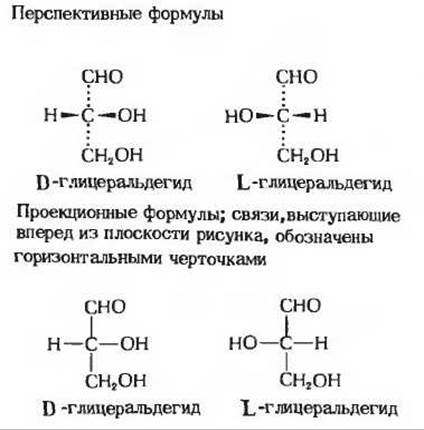
Fig. 11-5. Stereoisomers of glyceraldehyde.
Virtually all naturally occurring monosaccharides (except dihydroxyacetone) exhibit optical activity. For instance, D-glucose occurs in nature as the dextrorotatory isomer with a specific rotation of [а]20D = + 52.7°, whereas D-fructose occurs as the levorotatory compound ([а]20D = - 92.4°). Much like the stereoisomeric forms of Amino Acids (Chap. 5), all monosaccharide Stereoisomers are designated relative to a standard reference substance, glyceraldehyde, which has one D-form and one L-form (Fig. 11-5). However, because many aldoses possess two or more asymmetric centers, the convention is to use the D and L designations to specify the configuration of the asymmetric carbon atom farthest removed from the carbonyl carbon. If the hydroxyl group at this most remote asymmetric carbon atom points to the right in the projection formula, the sugar is assigned to the D-series; if it points to the left, it belongs to the L-series. Virtually all possible D-aldoses are found in nature (Fig. 11-4), but the most important ones to remember are the pentose D-ribose and the three hexoses—D-glucose, D-mannose, and D-galactose.
In a similar manner, the structures of all D-ketoses containing up to six carbon atoms can be depicted; all of them share the same configuration at the asymmetric carbon atom most distant from the carbonyl group. Ketoses are named by inserting the infix -ul- into the name of the corresponding aldose; for example, the aldopentose D-ribose corresponds to the ketopentose D-ribulose. Some ketoses, such as fructose, have trivial names. The biologically most significant sugars are the ketopentose D-ribulose, the ketohexose D-fructose, and the ketoheptose D-sedoheptulose (Fig. 11-6). L-aldoses and L-ketoses are occasionally found in nature, but they are relatively rare.
Two sugars that differ in configuration at only a single carbon atom are termed epimers of each other. Thus, D-glucose and D-mannose are epimers at C-2, whereas D-glucose and D-galactose are epimers at C-4 (Fig. 11-7).
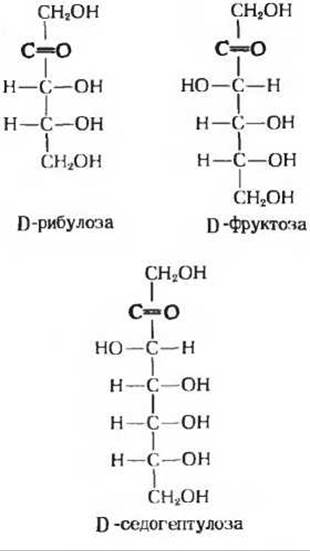
Fig. 11-6. The three most important ketoses.

Fig. 11-7. Epimers of D-glucose.
Last update: 06/08/2026
Editorial and Educational Adaptation: This material has been compiled based on the primary/original source text. The project team performed an editorial review, corrected technical inaccuracies, structured sections, and adapted the content for an educational format.
What was processed:
- elimination of formatting defects (OCR errors, structural breaks, corrupted characters);
- editorial organization of content;
- standardization of terminology in accordance with academic sources;
- verification of factual statements against the original source text.
All mentions of the author, publication year, and origin of the primary text have been preserved in accordance with the source.