ECOLOGICAL BIOCHEMISTRY - Study Guide - V. M. Isaienko 2005
Chapter 5. BIOCHEMICAL BASIS OF TASTE AND AROMA FORMATION IN PLANTS CONSUMED BY MAMMALS
5.2. Human Selection of Plant Foods Based on Taste and Olfactory Characteristics
Early humans had A wide variety of plants available for food, as evidenced by plant remains discovered at archaeological sites. This is also supported by the range of plants consumed today by peoples with traditional cultures, such as the San people in Africa or the Veddahs in Sri Lanka. The Development of civilization and urbanization has led to a more restricted Selection of plants in the human diet, primarily due to plant cultivation and food preparation. Selective breeding has resulted in the elimination or significant reduction of toxins in edible plants or their specific parts, as well as the propagation of plants with favorable traits.
Food preparation Methods play a major role in altering the taste and digestibility of edible plants. Potatoes, for instance, would likely not have become such a dietary staple if consumed raw, since human bodies can only assimilate potato starch after boiling or frying. Furthermore, boiling and other thermal Processing techniques help break down and remove many toxic compounds.
When selecting plants for consumption, humans are guided by nutritional value, taste, aroma, color, shape, and texture. Much like in animals, sweet tastes and pleasant aromas act as attractants, whereas bitter, sour, and pungent flavors typically serve as repellents. However, a moderate degree of bitterness, acidity, or astringency in the presence of sugars enhances food appeal, preventing it from tasting bland. A preference for bitterness can also be acquired, as demonstrated by beer enthusiasts who favor more bitter varieties. This characteristic beer flavor is produced by hop components such as humulones and lupulones, which were originally added to improve the brewing process.
The chemical components responsible for the specific flavor profiles of plant foods are extremely diverse. Some of these are listed in Table 5.2 and shown in Fig. 5.1.
Nevertheless, It is important to remember that the final identification of food taste and aroma depends on human subjective evaluation. Specific standards exist for describing flavor characteristics, and evaluations are conducted by trained experts.
Class="center">Table 5.2
CHEMICAL COMPOUNDS IN PLANTS
DETERMINING THE TASTE AND AROMA OF FRUITS AND VEGETABLES
(after Harborne, 1985, modified)
Plants |
Flavour and aroma compounds |
Fruits |
|
Pears |
Ethyl trans-2,cis-4-decadienoate |
Apples |
Ethyl 2-methylbutyrate |
Bananas |
Amyl acetate, amyl propionate, eugenol |
Coconuts |
α-Nonalactone |
Grapefruits |
Nootkatone |
Lemons |
Citral |
Mandarins |
Methyl N-methylanthranilate, thymol |
Peaches |
Undecalactone |
Raspberries |
1-(N-Hydroxyphenyl)-3-butanone |
Vanilla |
Vanillin |
Vegetables |
|
Black pepper |
2-Isobutyl-3-methoxypyrazine |
Celery |
Alkylidenephthalides, diacetylpyruvate |
Cucumber |
CH3CH2-CH=CHCH2CH=CHCHO |
Garlic |
Di-2-propenyl disulfide |
Onion |
Dipropyl disulfide, propanethiol (lacrimatory factor — propanethial-S-oxide) |
Mushrooms |
Lenthionine |
Today, the flavor profiles of numerous fruits and vegetables have been identified. In some cases, flavor is determined by a single compound (pears, apples, peaches, coconut, etc.), while in others it results from a combination of several compounds acting simultaneously (bananas, celery, onions, etc.) (Table 5.2). For blackcurrants and strawberries, at least 100 such compounds have been detected, and it remains unclear which specific ones dictate their distinct taste and aroma. Synthetic ethyl 1-methyl-2-phenylglycidate is often used for strawberry flavoring. In coffee, over 700 substances have been found that contribute in various ways to its taste and aroma.
There is no direct correlation between a compound's chemical Structure and its aroma. For instance, two structurally similar compounds — undecalactone and α-nonalactone (Fig. 5.1) — exhibit entirely different scents, resembling peach and coconut, respectively.
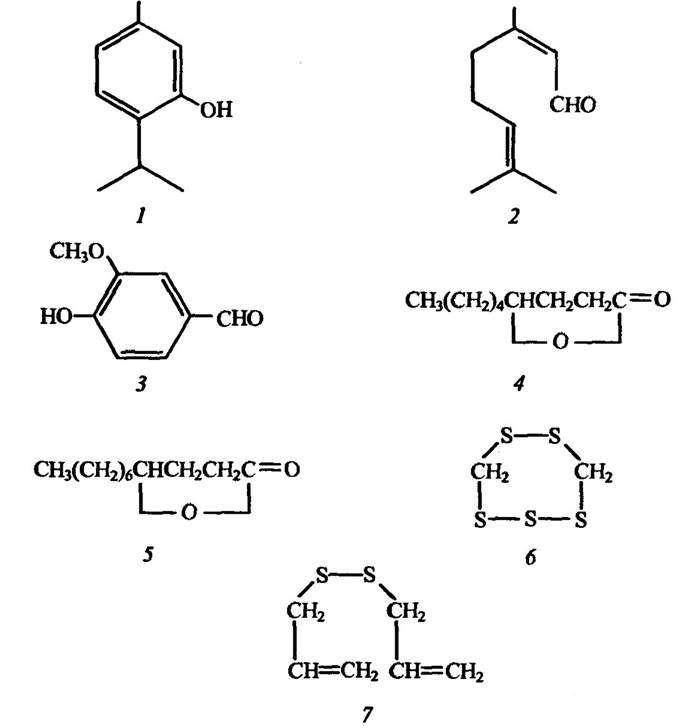
Fig. 5.1. Chemical structures of selected plant compounds determining odor:
1 — thymol (mandarin peel); 2 — citral (lemon); 3 — vanillin (vanilla); 4 — α-nonalactone (coconut); 5 — undecalactone (peach); 6 — lenthionine (mushrooms); 7 — di-2-propenyl disulfide (garlic)
Ginger roots (Zingiber officinale) produce zingerone derived from gingerol and paradol, which possess a pungent taste. The structures of these compounds, along with related substances determining the hot taste of black pepper, chili pepper, and Curcuma longa, are shown in Fig. 5.2.
Mustard oils, which give mustard its sharp taste, act as insect repellents (see Chapter 3). At the same time, mustard is used in small quantities as a condiment in human cuisine. The pungency of mustard
is due to the presence of the sulfur-containing volatile compound allyl isothiocyanate, while its hot kick comes from p-hydroxybenzyl isothiocyanate. When mustard spoils, butyl isothiocyanate imparts an off-flavor, and allyl cyanide gives an onion-like aftertaste.
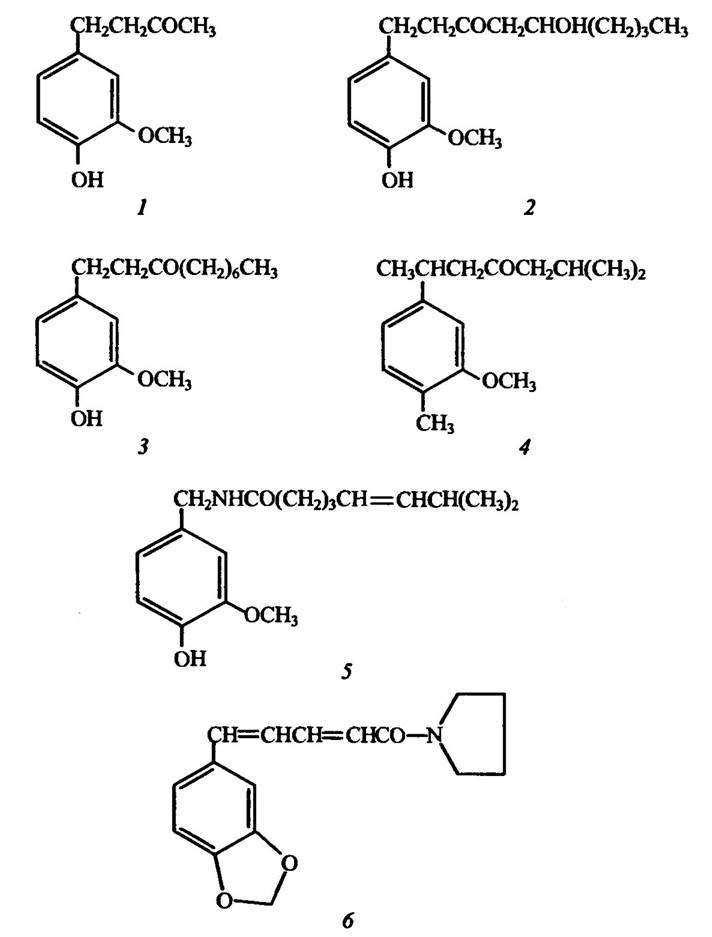
Fig. 5.2. Chemical structures of selected plant compounds determining pungent (hot) taste:
1 — zingerone; 2 — gingerol; 3 — paradol: all from Zingiber officinale; 4 — turmerin from Curcuma longa; 5 — capsaicin from Capsicum annuum; 6 — piperine from Piper nigrum
Onions and garlic also contain sulfur compounds, predominantly aliphatic disulfides (Table 5.1). Lenthionine similarly contains related compounds but lacks an unpleasant odor (found in the mushroom Lentinus edodes, etc.).
As noted previously, the sweet taste of plants is most commonly determined by sucrose, glucose, and fructose. Sucrose predominates in the majority of plants. It accumulates in large quantities in the stems of sugarcane and the roots of sugar beet. This substance is typically regarded as the human standard for sweetness and is used as a baseline to compare Other Compounds (Table 5.3).
Table 5.3
RELATIVE SWEETNESS OF PLANT COMPOUNDS
Compound |
Sweetness relative to sucrose |
Compound |
Sweetness relative to sucrose |
Sucrose |
1.0 |
Naringenin dihydrochalcone |
500 |
Glucose |
0.7 |
||
Fructose |
1.3 |
Neohesperidin dihydrochalcone |
1000 |
Cyclamate |
ЗО |
||
Glycyrrhizin |
50 |
||
Stevioside |
300 |
Monellin |
3000 |
Saccharin |
500 |
Thaumatin |
5000 |
A sweet taste is characteristic not only of certain plant sugars but also of specific synthetic compounds, such as cyclamate and saccharin. However, regular consumption of these substances is not recommended, as they can leave an aftertaste and are potentially carcinogenic. Furthermore, synthetic sweeteners are non-caloric (or energy-free). At the same time, A number of glucose-free and harmless synthetic substances have been proposed for inclusion in diabetic diets.
Research is also underway to find natural non-carbohydrate compounds. For instance, the diterpene glycoside stevioside—discovered in the leaves of Stevia rebaudiana—is 300 times sweeter than sucrose. The fruits of Dioscoreophyllum cumminsii and Thaumatococcus daniellii contain Proteins such as monellin, monellin-like proteins, and thaumatin I and II, which exhibit an exceptionally sweet taste (Table 5.3). Interestingly, these substances are not perceived as sweet by dogs, pigs, rabbits, and hamsters, suggesting that The Nature of taste receptors may vary among different mammals.
The structures of several sweet plant compounds are shown in Fig. 4.18 and Fig. 5.3.
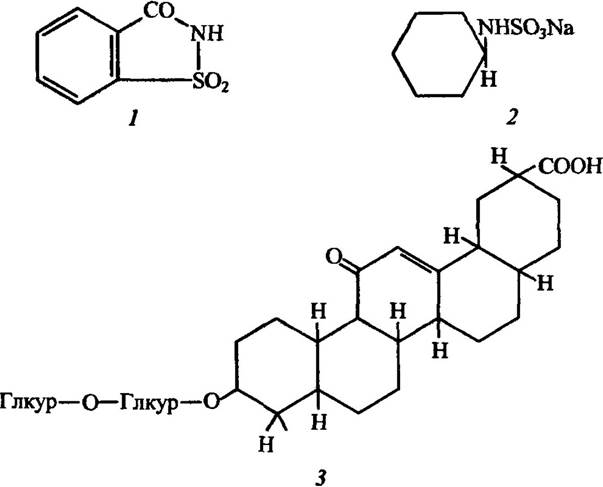
Fig. 5.3. Structures of certain plant compounds with a sweet taste:
1 — saccharin; 2 — cyclamate; 3 — glycyrrhizin; Glcur — glucuronic acid residue.
It should be noted that the chemical modification of bitter-tasting compounds can yield sweet-tasting derivatives. A typical example is the chemical modification of bitter naringin, which involves opening the central pyran ring and reducing the isolated double bond. The resulting dihydrochalcone molecule exhibits a pronounced sweet taste.
Among the diverse plant compounds that determine taste and aroma, some act as enhancers (intensifiers) of these attributes. These substances are typically simple molecules that are odorless and tasteless on their own, yet they amplify the sensory Effects of Other compounds.
The best-known taste intensifier is sodium chloride (NaCl), which must be used in small amounts since it possesses a strong taste of its own. Monosodium glutamate and 6-hydroxypurine-5'-mononucleotide are also widely used as flavor enhancers in the food industry.
The glycoprotein miraculin, found in the fruit of Synsepalum dulcificum, has The ability to mask sour tastes. Pentacyclic triterpenes known as gymnemic acids, present in the leaves of Gymnema sylvestre, suppress sweet and, to some extent, bitter tastes. These gymnemic acids can also function as natural feeding deterrents.
Last update: 06/08/2026
Editorial and Educational Adaptation: This material has been compiled based on the primary/original source text. The project team performed an editorial review, corrected technical inaccuracies, structured sections, and adapted the content for an educational format.
What was processed:
- elimination of formatting defects (OCR errors, structural breaks, corrupted characters);
- editorial organization of content;
- standardization of terminology in accordance with academic sources;
- verification of factual statements against the original source text.
All mentions of the author, publication year, and origin of the primary text have been preserved in accordance with the source.