Practical Protein Chemistry - A. Darbre 1989
Application of electron impact mass spectrometry for determining the amino acid sequence of peptides and proteins
Sample preparation methods
Reagent purification
Analytical-grade methanol, chloroform, and acetic anhydride are generally used without prior purification. The quality of methyl iodide depends on its manufacturing method and must be carefully checked each time. For this purpose, the methyl iodide is used to methylate a peptide whose methyl derivative spectrum is well-documented. The amount of impurities in the reagent is evaluated by comparing the mass spectra of the standard and test compounds. If a high level of impurities is present, using the reagent is impractical. Attempts to purify the reagent by distillation result in the removal of stabilizing additives. Dimethyl sulfoxide is purified by distillation over calcium hydride under reduced pressure and is also stored over calcium hydride. When using sodium hydride, typically supplied as an oil suspension, the reagent must first be thoroughly washed multiple times with diethyl ether dried over sodium, and then dried in a vacuum. The resulting gray powder can be stored for a long period (up to a year) in a hermetically sealed container, provided it is exposed to atmospheric air only briefly when opened.
Class="center">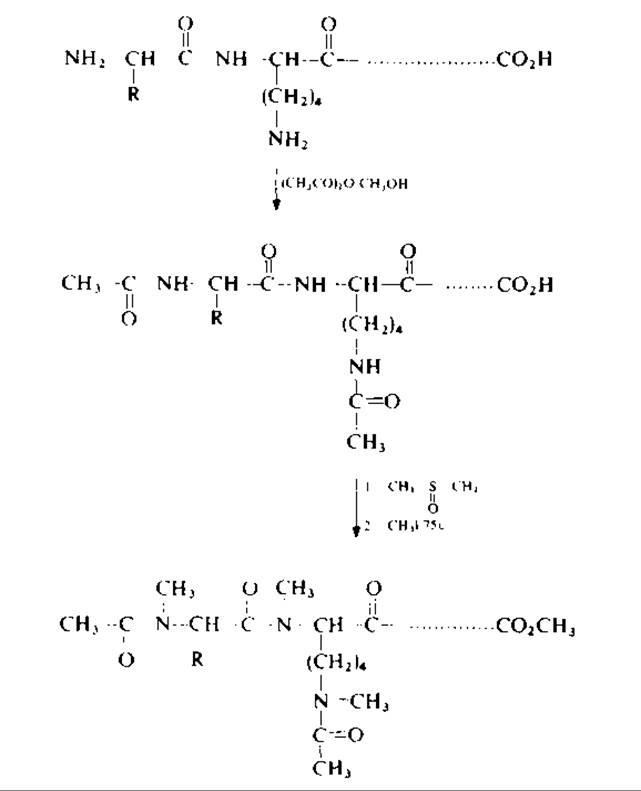
FIG. 19.1. Acetylation and exhaustive methylation of Peptides for mass spectrometry [22].

FIG. 19.2. Conversion of Arginine residues into Ornithine residues [22].
Last update: 06/08/2026
Editorial and Educational Adaptation: This material has been compiled based on the primary/original source text. The project team performed an editorial review, corrected technical inaccuracies, structured sections, and adapted the content for an educational format.
What was processed:
- elimination of formatting defects (OCR errors, structural breaks, corrupted characters);
- editorial organization of content;
- standardization of terminology in accordance with academic sources;
- verification of factual statements against the original source text.
All mentions of the author, publication year, and origin of the primary text have been preserved in accordance with the source.