Vertebrate Zoology: A Study Guide - T. A. Dauda 2014
Multicellular Animals
Class Aves
Superorder Carinatae - Order Podicipediformes
The superorder Carinatae (or Neognathae) comprises the vast majority of modern bird species (Figs. 41, 42, 44, 46). Most of them are capable of flight. Accordingly, their Sternum features a prominent keel, their contour feathers possess well-developed vanes, their bones are pneumatic, and air sacs are present.
There is no single consensus on the Taxonomy of carinates. Therefore, we will examine several orders whose representatives are widely distributed and well known.
This order unites aquatic birds of small to medium size with a stout build and legs set far back on the body. Each toe is bordered by an independent cutaneous fringe. The wings and tail are short, and the plumage is loose. Representatives of this order spend most of their life on Water, swimming and diving exceptionally well. They fly swiftly but reluctantly, taking off with difficulty after a long running start over the water surface. They move awkwardly on land.
Class="center">
Fig. 41 Representatives of the superorder Carinatae:
1 — Capercaillie (order Galliformes); 2 — Curlew (order Charadriiformes); 3 — Greylag goose (order Anseriformes).
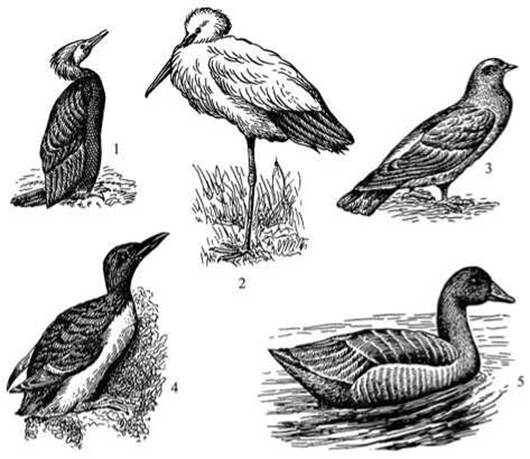
Fig. 42 Representatives of the superorder Carinatae:
1 — Cormorant (order Pelecaniformes); 2 — Stork (order Ciconiiformes); 3 — Rock dove (order Columbiformes); 4 — Guillemot (order Charadriiformes); 5 — Greylag goose (order Anseriformes).
Grebes inhabit various types of water bodies, though predominantly freshwater habitats. They construct their nests from the stems of aquatic plants, which float in clumps on the water surface. The clutch typically contains 3–8 eggs. Both male and female take turns incubating them. When danger threatens, the parents carry the chicks on their backs, tucking them under their wings when diving. They feed mainly on aquatic insects and their larvae, and less frequently on small crustaceans, Mollusks, and small fish. They are capable of diving to depths of up to 7 m in search of food.
Throughout most of their range, representatives of this order are migratory birds; some of them winter in the Transcaucasus and Central Asia. Five species of grebes inhabit our country, three of which are quite common in the temperate zone. These are the great crested grebe, the horned grebe, and the red-necked grebe. They are hunted in small numbers, and their skins are used for garment trimming. Their meat is of poor culinary quality.
Last update: 13/08/2026
Editorial and Educational Adaptation: This material has been compiled based on the primary/original source text. The project team performed an editorial review, corrected technical inaccuracies, structured sections, and adapted the content for an educational format.
What was processed:
- elimination of formatting defects (OCR errors, structural breaks, corrupted characters);
- editorial organization of content;
- standardization of terminology in accordance with academic sources;
- verification of factual statements against the original source text.
All mentions of the author, publication year, and origin of the primary text have been preserved in accordance with the source.