GENERAL MICROBIOLOGY - T.P. Pyrohiv - 2004
12. METABOLIC ACTIVITY OF AEROBIC HETEROTROPHS
12.6. INCOMPLETE OXIDATION
12.6.2. Acid Production by Fungi
Fungi are characterized by an oxidative type of METABOLISM. However, this does not mean they are incapable of anaerobic carbohydrate Cleavage—in other words, Fermentation (Alcoholic Fermentation is carried out precisely by Yeasts!). Yet, prolonged fungal growth is impossible under anaerobic conditions.
In their natural habitats, intermediate metabolic products of fungi never accumulate. When nutrients are scarce, fungi obtain maximum energy and synthesize cellular components through the complete oxidation and assimilation of substrates. In laboratory and industrial settings, fungi are subjected to conditions that "disorganize" their metabolism to synthesize organic acids. Such conditions include an excess of carbohydrate substrates and the removal of certain Trace Elements from the nutrient medium (iron, manganese, copper, magnesium, potassium, calcium).
Partial information regarding the Production of organic acids by fungi is provided in Chapter 8.
Lactic acid is produced primarily by Representatives of the order Mucorales (Rhizopus oryzae, Rhizopus nigricans). However, in fungi, lactic acid is not the sole product, unlike in Homofermentative lactic acid Bacteria. In addition to lactic acid, small amounts of fumaric, succinic, malic, formic, and acetic acids, as well as ethanol, are formed. Maximum lactic acid yield requires the presence of oxygen.
Representatives of the order Mucorales are also capable of producing fumaric acid.
Gluconic acid is synthesized by Aspergilli and Penicilli. Gluconic acid is a product of the enzymatic oxidation of glucose by extracellular glucose oxidase.
Oxalic acid is synthesized by many fungi. Its formation is favored by an alkaline reaction of the nutrient medium.
The industrial producer of citric acid is Aspergillus niger. The optimal pH for its production is 2.5–3.5. When the pH increases, gluconic acid begins to form, followed by oxalic acid. The highest acid yield can be achieved when iron and zinc are present at limiting concentrations.
Itaconic acid is produced by only a few strains (Aspergillus itaconicus, Aspergillus terreus).
Mechanism of acid formation in fungi. The formation of various acids from glucose involves the reactions of The Tricarboxylic Acid Cycle (Fig. 12.10).
Class="center">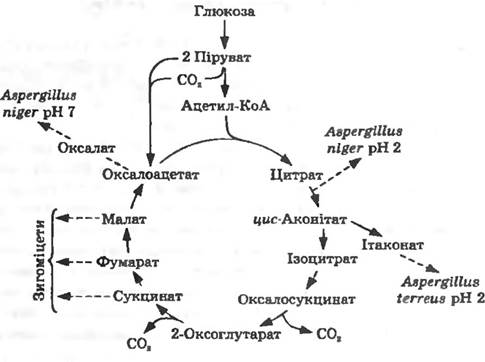
Fig. 12.10. Production of organic acids in fungi
Malic (malate), fumaric, succinic (succinate), and citric (citrate) acids are formed directly in the TCA cycle and excreted into the medium. Oxalic acid (oxalate) is formed As a result of the Hydrolysis of oxaloacetate (catalyzed by the enzyme oxaloacetate hydrolase). The precursor of itaconic acid is aconitate; its decarboxylation leads to the formation of itaconic acid.
If intermediate products (in this case, organic acids) are removed from the cycle, anaplerotic reactions must function to supply the TCA cycle with oxaloacetate. One such reaction is the carboxylation of Pyruvate to form oxaloacetate.
Last update: 12/08/2026
Editorial and Educational Adaptation: This material has been compiled based on the primary/original source text. The project team performed an editorial review, corrected technical inaccuracies, structured sections, and adapted the content for an educational format.
What was processed:
- elimination of formatting defects (OCR errors, structural breaks, corrupted characters);
- editorial organization of content;
- standardization of terminology in accordance with academic sources;
- verification of factual statements against the original source text.
All mentions of the author, publication year, and origin of the primary text have been preserved in accordance with the source.