Medical Genetics - V. M. Zaporozhan 2005
Diagnostic Methods for Hereditary Diseases
Molecular Genetic Methods (DNA Diagnostics Methods)
Other DNA Diagnostic Methods — Electrophoresis of DNA Fragments
Virtually any DNA diagnostic protocol involves the Electrophoresis of DNA fragments in agarose or polyacrylamide gels. DNA molecules carry a negative charge and migrate toward the positively charged electrode during electrophoresis. The shorter the fragment, the greater the distance it travels through the gel. This migration distance can also depend on the conformation of the DNA fragments (see Fig. 10.10).
To visualize DNA within the gel, specific Dyes such as ethidium bromide are added. This fluorescent dye selectively binds to DNA. The gel is then examined under transilluminated ultraviolet light, revealing DNA bands as characteristic orange fluorescent regions. The gel is photographed or scanned, and the resulting image is transferred to a computer screen for further analysis.
Restriction fragment length polymorphism (RFLP) analysis is a widely used method in DNA Diagnostics. The Principle of the method is as follows: extracted DNA is treated with Enzymes that cleave it into fragments at specific recognition sites (restriction sites). Pathogenic Mutations can alter these restriction sites, leading to Changes in the lengths of the resulting fragments. Upon electrophoresis, the bands of the control normal DNA and the test DNA appear at different levels (see Fig. 10.10).
Class="center">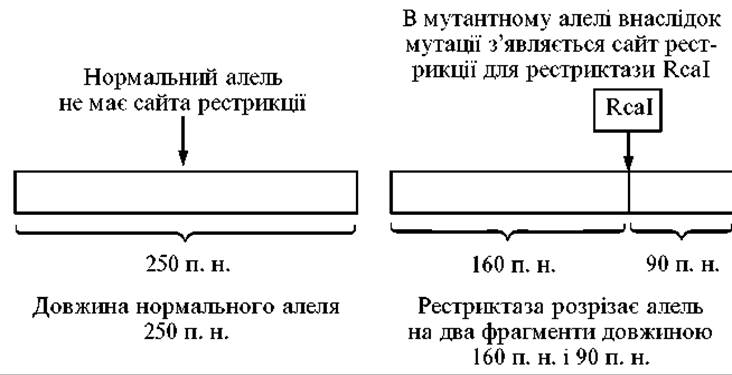
Fig. 10.9. Creation of a restriction site resulting from a mutation in the dysferlin Gene exon in Miyoshi myopathy (an autosomal recessive disorder)
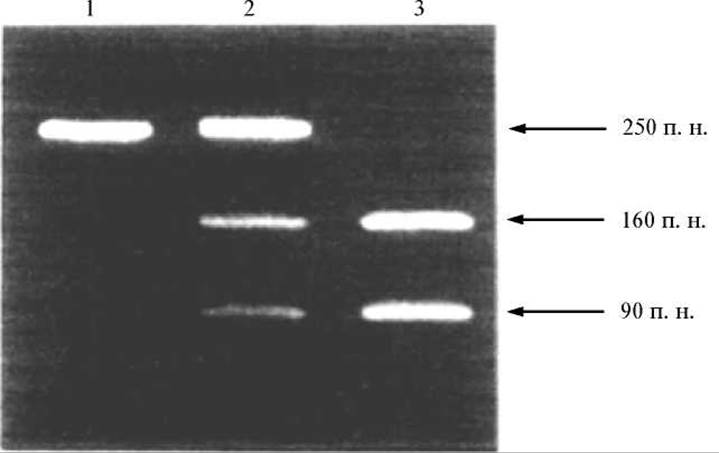
Fig. 10.10. Direct DNA diagnostics of Miyoshi myopathy using the RcaI restriction enzyme (electrophoresis of PCR products digested with RcaI: lane 1 — homozygous for the normal 250 bp allele; lane 2 — heterozygous mutation carrier, showing both the normal 250 bp allele and the mutant allele cleaved into 160 bp and 90 bp fragments; lane 3 — homozygous for the mutant allele)
Last update: 11/08/2026
Editorial and Educational Adaptation: This material has been compiled based on the primary/original source text. The project team performed an editorial review, corrected technical inaccuracies, structured sections, and adapted the content for an educational format.
What was processed:
- elimination of formatting defects (OCR errors, structural breaks, corrupted characters);
- editorial organization of content;
- standardization of terminology in accordance with academic sources;
- verification of factual statements against the original source text.
All mentions of the author, publication year, and origin of the primary text have been preserved in accordance with the source.