Principles of Biochemistry, Volume 2 - A. Lehninger 1985
Bioenergetics and Metabolism
Biosynthesis of Amino Acids and Nucleotides
Alanine, aspartate, and asparagine are also synthesized from central metabolites
In most organisms, two nonessential Amino Acids—Alanine and aspartate—are formed by Transamination from Pyruvate and oxaloacetate, respectively:
Class="center">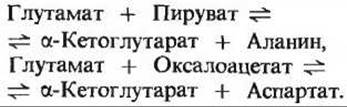
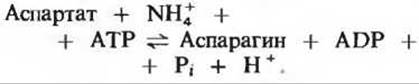
In many Bacteria, aspartate serves as the direct precursor of asparagine in a reaction catalyzed by asparagine synthetase (a reaction analogous to the Glutamine Synthetase reaction):
However, mammalian Tissues utilize a different pathway for asparagine synthesis: here, an ATP-dependent asparagine synthetase transfers the amide amino group of glutamine to the ß-carboxyl group of aspartate (Fig. 22-3)
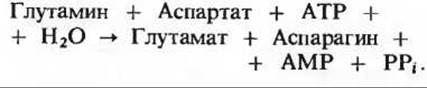

Fig. 22-3. Formation of asparagine from aspartate in animal tissues. In many bacteria, asparagine is synthesized via a different pathway (see text).
Last update: 06/08/2026
Editorial and Educational Adaptation: This material has been compiled based on the primary/original source text. The project team performed an editorial review, corrected technical inaccuracies, structured sections, and adapted the content for an educational format.
What was processed:
- elimination of formatting defects (OCR errors, structural breaks, corrupted characters);
- editorial organization of content;
- standardization of terminology in accordance with academic sources;
- verification of factual statements against the original source text.
All mentions of the author, publication year, and origin of the primary text have been preserved in accordance with the source.