Biochemistry, Vol. 1 - A. Lehninger 1985
Biomolecules
Vitamins and Trace Elements: Their Role in Enzyme Function
Vitamin K as a Component of the Carboxylating Enzyme
The two main forms of vitamin K—Vitamins K1 and K2—are found in significant amounts in most higher plants. Both forms are naphthoquinones with isoprenoid side chains of varying lengths (Fig. 10-24). Vitamin K deficiency in chicks and other animals leads to impaired Blood clotting.
Relatively recently, The biochemical function of vitamin K in the blood clotting mechanism was successfully established. Vitamin K is essential for the normal production of prothrombin, a Blood Plasma protein that serves as the inactive precursor of Thrombin—the enzyme that converts the plasma protein fibrinogen into fibrin, an insoluble, fibrous protein that promotes blood clot formation. For prothrombin to be activated and converted into thrombin, it must bind Ca2+ ions. In animals with a vitamin K deficiency, defective prothrombin molecules are synthesized that are unable to properly bind Ca2+ ions. A normal prothrombin molecule contains several residues of a unique amino acid, γ-carboxyglutamic acid, which is responsible for binding Ca2+ ions. In vitamin K deficiency, glutamic acid residues are incorporated into the prothrombin molecule instead of γ-carboxyglutamic acid residues. John Suttie of the University of Wisconsin discovered an enzymatic system capable of converting glutamic acid residues in prothrombin—isolated from the blood of vitamin K-deficient animals—into γ-carboxyglutamic acid residues. Vitamin K is required for this enzyme's activity (Fig. 10-25). Several other Ca2+-binding Proteins in the body also contain γ-carboxyglutamic acid residues.
Class="center">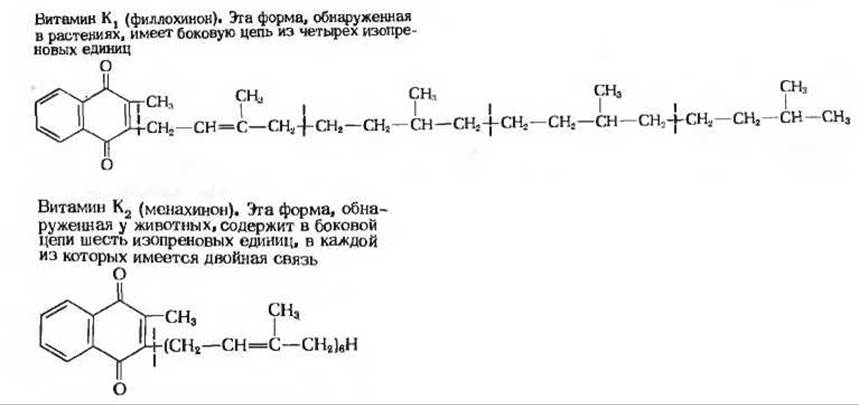
Fig. 10-24. Different forms of vitamin K.
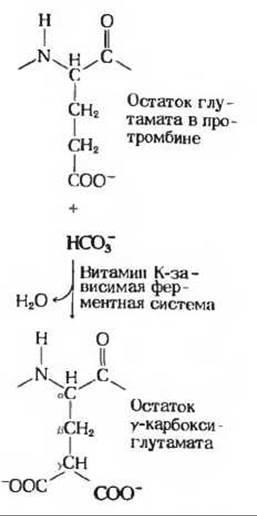
Fig. 10-25. The function of vitamin K as a cofactor in The formation of γ-carboxyglutamic acid residues in prothrombin and other proteins.
Last update: 06/08/2026
Editorial and Educational Adaptation: This material has been compiled based on the primary/original source text. The project team performed an editorial review, corrected technical inaccuracies, structured sections, and adapted the content for an educational format.
What was processed:
- elimination of formatting defects (OCR errors, structural breaks, corrupted characters);
- editorial organization of content;
- standardization of terminology in accordance with academic sources;
- verification of factual statements against the original source text.
All mentions of the author, publication year, and origin of the primary text have been preserved in accordance with the source.