Vertebrate Zoology: A Tutorial - T. A. Dauda 2014
Multicellular Animals
Class Aves
Superorder Neognathae — Order Gruiformes
Cranes are large birds with long legs and necks (Fig. 46). Their bills are straight and elongated, and their tails are short. They are monogamous and exhibit precocial development. They are capable of producing loud, trumpeting calls. They widely inhabit open spaces, primarily marshy areas. Six species are found in our country. Among them, the common crane—standing up to 120 cm tall and weighing up to 6 kg—has the widest distribution, ranging from the forest-tundra to deserts and mountains. Its plumage is gray, while the HEAD, legs, and neck are black. Cranes build their nests on quagmires or in dense brush. The clutch consists of 2–3 eggs. Nesting is preceded by courtship displays ("crane dances"). During incubation, they stay in pairs, while in the non-breeding season, they form flocks and family groups. They forage in dry areas for berries, young shoots, insects, and Mollusks, occasionally eating frogs, reptiles, and rodents. The demoiselle crane inhabits southern steppe regions; the Siberian crane (sterkh) and the sandhill crane live in northern Siberia; and the Japanese crane is found in the Primorye region. All cranes are migratory birds, spending the winter in South Asia and Africa. Generally, crane populations are low or very low, and therefore they are protected.
Class="center">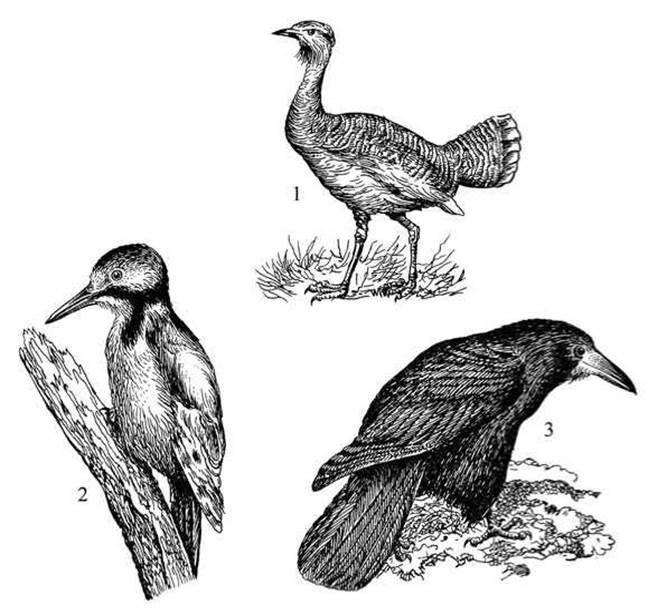
Fig. 46 Representatives of the superorder Carinatae:
1 — great bustard (order Gruiformes); 2 — great spotted woodpecker (order Piciformes); 3 — rook (order Passeriformes).
Last update: 13/08/2026
Editorial and Educational Adaptation: This material has been compiled based on the primary/original source text. The project team performed an editorial review, corrected technical inaccuracies, structured sections, and adapted the content for an educational format.
What was processed:
- elimination of formatting defects (OCR errors, structural breaks, corrupted characters);
- editorial organization of content;
- standardization of terminology in accordance with academic sources;
- verification of factual statements against the original source text.
All mentions of the author, publication year, and origin of the primary text have been preserved in accordance with the source.