MODERN BOTANY — P. RAVEN — 1990
SECTION IV. DIVERSITY
CHAPTER 10. THE CLASSIFICATION OF LIVING ORGANISMS
At least 5 million Different types of living organisms coexist in the biosphere. We humans stand apart from other creatures due to our greater curiosity and capacity for speech. It is precisely these two traits that have long driven us to learn more about other living things and share information about them. As our knowledge of organisms expanded, it became necessary to know the names given to them by different peoples in order to absorb what others had already discovered and to communicate new insights to those around us.
While most familiar organisms have common names, these are inadequate even for the simplest purposes. Sometimes they are misleading, particularly when we exchange information with people from different PARTS OF THE world. For instance, the words sycamore and cowslip can refer to entirely different plants in Great Britain and North America. In Europe and the US, pine means Pinus, whereas in Australia it refers to Araucaria. The word yam in the southeastern United States denotes a vegetable quite different from the one known by that name in the West Indies. Language barriers complicate the issue hopelessly. Consequently, biologists designate organisms by Latin names officially recognized by international organizations of botanists, bacteriologists, and zoologists.
These Latin terms originated from vernacular plant names—specifically, the ones mentioned above. Various groups of organisms have long been united into distinct "types," such as "oaks," "roses," "dandelions," and so on. During the Middle Ages, when interest in sharing information about organisms surged, Latin was the language of science. Therefore, the Latin names of these "types" were adopted as a standard and became widely circulated in books printed using the newly invented movable type. Names were frequently borrowed from ancient Roman sources. In other cases, they were newly coined or derived by latinizing familiar words. Eventually, these "types" came to be called genera, while their individual representatives—such as the red oak or the willow oak—were termed species.
Originally, species were defined descriptively in Latin using sometimes a single word and sometimes many; such multi-word designations are known as polynomials, or polynomes. The first word in a polynome is the name of the genus to which the plant belongs. Thus, all oaks were defined by polynomes starting with the word Quercus, and all roses with the word Rosa. The ancient Latin names of these plants continue to be used as generic names to this day.
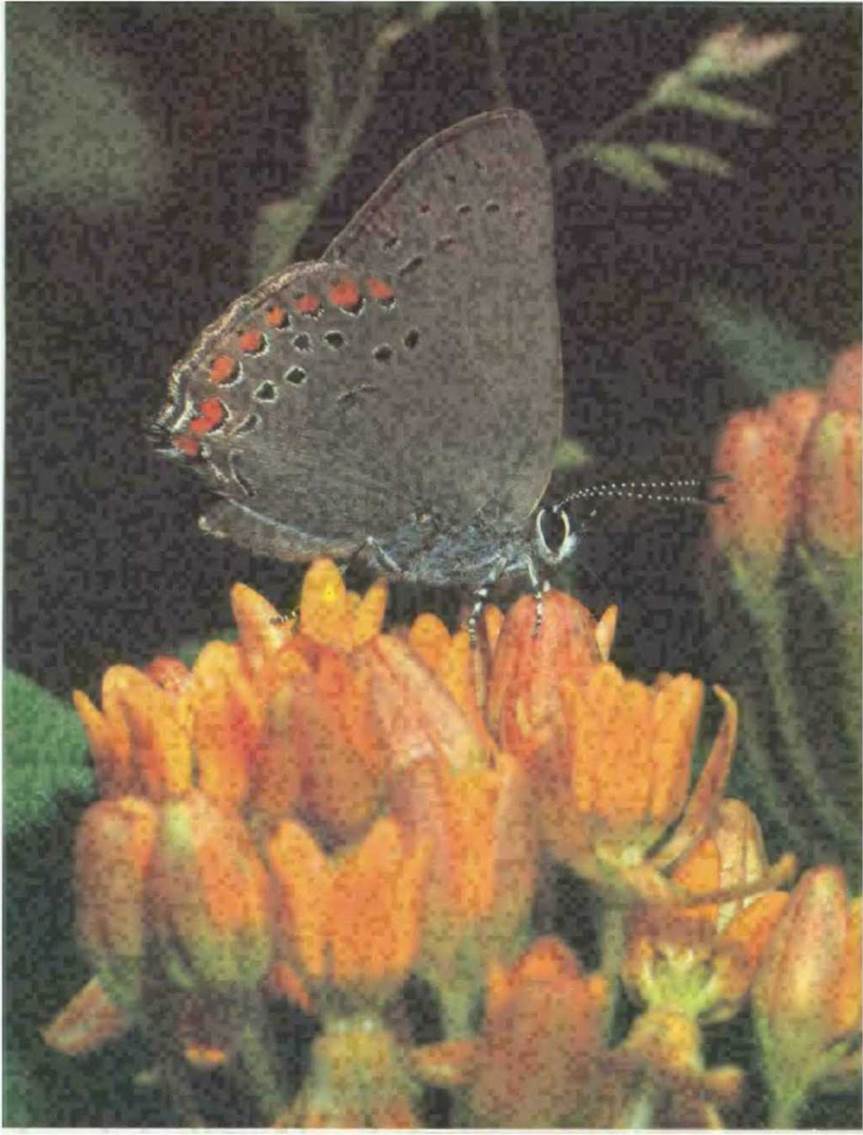
Class="center">Fig. 10-1. The butterfly Harkenclenus titus on a flower of butterfly weed (Asclepias tuberosa)
The Binomial (Binary) System
A major simplification in the naming system of living things was introduced by the 18th-century Swedish professor and naturalist Carl Linnaeus (Fig. 10-2), who set himself the grand goal of naming and describing all known plants, minerals, and animals. In 1753, he published the two-volume work Species Plantarum, employing polynomial designations for all plant species as a method for describing and naming them. In many cases, he altered the designations used by his predecessors to facilitate the comparison of polynomes belonging to different species within the same genus. Linnaeus considered these polynomes to be the true names of the species included in his book; however, by adding one crucial innovation, he laid the foundation for binary nomenclature—the sole system of biological naming in use today. In the margins of Species Plantarum, alongside the "true" polynomial name, he wrote a word that, when combined with the generic name, provided a convenient "shorthand" designation for the species. For example, in the case of catnip, which was officially designated as Nepeta floribus interrupte spicatis pedunculatis (meaning "Nepeta with flowers in an interrupted spiked inflorescence on pedicels"), Linnaeus placed the word cataria (meaning "pertaining to cats") in the margin, thereby highlighting the plant's well-known attractiveness to these animals. He and his contemporaries soon began referring to the species simply as Nepeta cataria. This is precisely how it is officially designated to this day.
Fig. 10-2. Carl Linnaeus (1707–1778), the naturalist who developed the binary system of Organism nomenclature. He believed that every living creature corresponds more or less precisely to a certain ideal model, and that Classification allows us to comprehend the grand plan of divine creation

The convenience of this new system was obvious, and cumbersome polynomes were soon replaced by binomial, or binary ("two-part"), names. The first binomial name assigned to a particular species takes priority over all other names given to that same species later. The rules for assigning botanical names to plants are contained in the International Code of Botanical Nomenclature, which is periodically revised at International Botanical Congresses convened every six years.
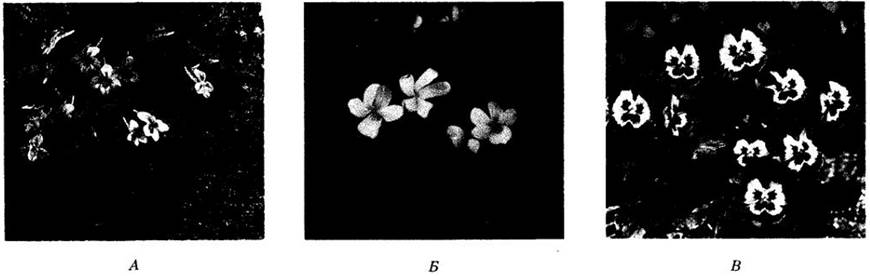
A species name consists of two parts: the generic name and the specific epithet. The generic name may also be used independently when referring to an entire group of species comprising that genus. For example, Fig. 10-3 depicts three species of the genus violet (Viola). If it turns out that a species was originally assigned to the wrong genus, the second part of the full name—the specific epithet—is transferred along with it to the new genus. If that genus already contains a species with the same epithet, a different name must be found for the transferred species. For every species, There is a type specimen—usually a herbarium voucher of the plant preserved in a museum and described by the person who first named the species, or by a subsequent author if the first did not do so. The type specimen serves as the baseline for comparing various herbarium specimens when determining whether they belong to a given species.
Fig. 10-3. Three Representatives of the genus violet. A. The hook-spurred violet (Viola rostrata), growing in temperate regions from the eastern part of North America to the Great Lakes in the west. B. Viola quercetorum, a yellow-flowered violet of California and southern Oregon. C. Pansy, Viola tricolor var. hortensis, an annually cultivated variety of a predominantly perennial wild species common in Western Europe. These photographs demonstrate differences in flower color and size, leaf blade shape and margin characteristics, and other features that allow us to distinguish between species of this genus despite their general resemblance. About 500 species of violets are known; the majority grow in the temperate Regions of the Northern Hemisphere
A specific epithet is meaningless if written separately from the generic name; for instance, biennis (biennial) could apply to any of numerous species across different genera that share this epithet in their names. Thus, Artemisia biennis (a species of wormwood) and Lactuca biennis (a species of lettuce) are two very different members of the Asteraceae family, whereas Oenothera biennis, the common evening primrose, belongs to an entirely different family. To avoid confusion, the specific epithet is always preceded by the name of the genus to which the species belongs, or by its initial letter, e.g., O. biennis (Oenothera biennis). Generic and specific names are italicized or underlined in handwritten and typewritten text.
Some species comprise two or more races, known as subspecies or varieties, which are generally similar to one another yet exhibit one or more important differences. As a result of such subdivision, PLANT AND ANIMAL names may occasionally consist of three or more parts, although binary nomenclature remains the foundation of classification. For instance, the peach tree is designated as Prunus persica var. persica, and the nectarine as Prunus persica var. nectarina. Subspecific and varietal names are also italicized or underlined, and for the subspecies or varieties described first (chronologically), the specific epithet is repeated.
WHAT IS A species?
Groups of populations that closely resemble one another and bear less resemblance to others are termed species, though the boundaries of this term vary considerably across different groups of organisms. The Latin word species, translated as "kind" or "appearance," lacks any rigid technical meaning and simply denotes a "type" or "sort." The Variability of different organism groups resulting from Evolutionary Processes (discussed in Chapter 28) varies widely, meaning METABOLISM/2.html">THE CONCEPT OF species cannot be applied uniformly to all living things. For example, genetic recombination is unknown in some groups (particularly in Algae related to Euglena and in most Bacteria), whereas in other groups, interbreeding between various forms is widespread, and interspecific Hybridization frequently occurs. Despite such differences, the term species is a convenient tool for discussing and classifying organisms.
Other taxonomic categories
Linnaeus and his predecessors recognized the kingdoms of plants, animals, and minerals. The kingdom remains the largest unit of biological classification. Between the levels of the genus and the kingdom, scientists employ several additional taxonomic categories. Specifically, genera are grouped into families, families into orders, orders into classes, classes into divisions (phyla), and those into kingdoms. Groups that botanists call orders and divisions are referred to in zoology as orders and phyla, respectively—an awkward distinction rooted in history.
The existing rules for forming names of various categories make it possible to recognize their rank. For example, with very few exceptions, plant family names end in -aceae. Certain traditional names are retained as alternatives in only a few instances; for example, the family Fabaceae (legumes) may also be called Leguminosae; Apiaceae (umbellifers) as Umbelliferae; Asteraceae (composites) as Composites (Asteraceae). Plant order names end in -ales. No scientific names other than those of genera and species are italicized or underlined.
Fig. 10-4. Monera. This kingdom includes bacteria, the only group of prokaryotes. A. Lactobacillus acidophilus, a bacterium that causes milk to sour. B. A gelatinous colony of the cyanobacterium Nostoc. Cyanobacteria are one of the most abundant groups of photosynthetic bacteria. C. The filamentous cyanobacterium Oscillatoria
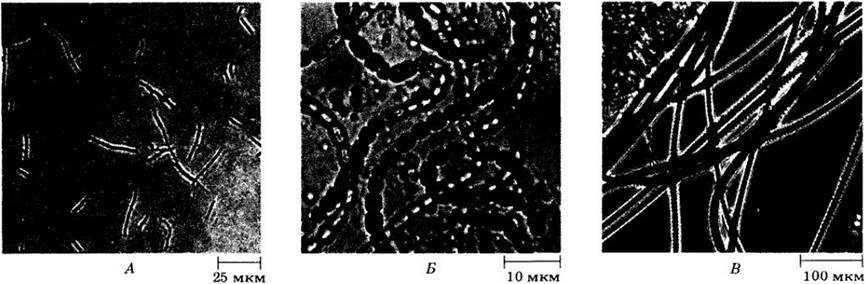
Fig. 10-5. Protista. A. Plasmodium of the plasmodial slime mold Physarum on an Agar culture medium. B. Postelsia palmiformis, a brown alga also known as the "sea palm", on exposed rocks during low tide near Vancouver Island (British Columbia). C. Motile colonial green alga Volvox. D. Red alga Sebdenia polydactyla. E. Pennate diatom with a heavily ornamented frustule characteristic of this group.

Examples of the classification of corn (Zea mays) and the widely cultivated edible mushroom (Agaricus campestris) are given in Table 10-1.
Last update: 07/08/2026
Editorial and Educational Adaptation: This material has been compiled based on the primary/original source text. The project team performed an editorial review, corrected technical inaccuracies, structured sections, and adapted the content for an educational format.
What was processed:
- elimination of formatting defects (OCR errors, structural breaks, corrupted characters);
- editorial organization of content;
- standardization of terminology in accordance with academic sources;
- verification of factual statements against the original source text.
All mentions of the author, publication year, and origin of the primary text have been preserved in accordance with the source.