Practical Protein Chemistry - A. Darbre 1989
Determination of C-terminal amino acid sequence
Determination of C-terminal groups
Determination of C-terminal amino acids via oxazolone alcoholysis
This new method for C-terminal analysis is based on The conversion of the C-terminal amino acid into an imido ester, which is readily cleaved by alcohols under acidic conditions [68]. Cyclic imido esters are formed via intramolecular dehydration that occurs during The formation of either an oxazolinone (by closure of the C-terminal carboxyl group onto the ultimate peptide bond) or an oxazole (by closure of the esterified C-terminal group onto the ultimate peptide bond).
For the reaction to proceed successfully, the pathway involving oxazole formation is preferred, since under acidic alcoholysis the latter is quantitatively cleaved to yield a C-terminal amino acid ester. Alcoholysis of oxazolinones in acidic media yields the free C-terminal amino acid, but the major byproduct is the uncleaved peptide ester (Fig. 18.8). This method can be used to identify C-terminal residues, and current efforts are underway to develop a sequential C-terminal degradation technique based on this approach.
Class="center">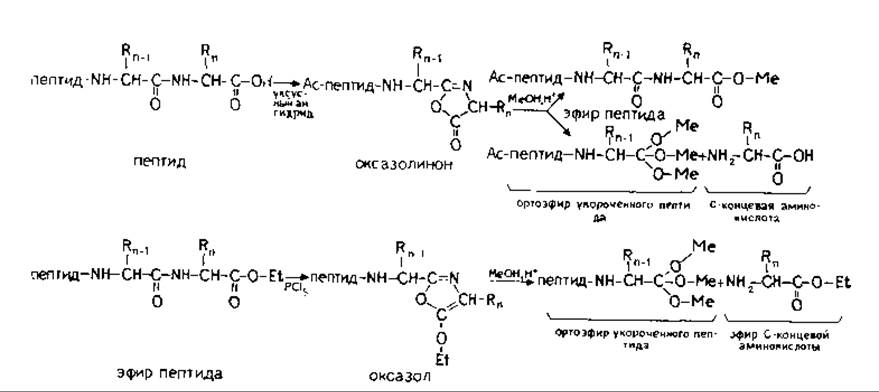
FIG. 18.8. Reactions occurring during C-terminal analysis involving the alcoholysis of an oxazolinone or an oxazole. Acid-catalyzed alcoholysis can proceed via two pathways, leading to the Formation of the uncleaved peptide ester and the C-terminal amino acid. Acid-catalyzed alcoholysis of the corresponding oxazole lacks this drawback, yielding exclusively the C-terminal amino acid ester [68].
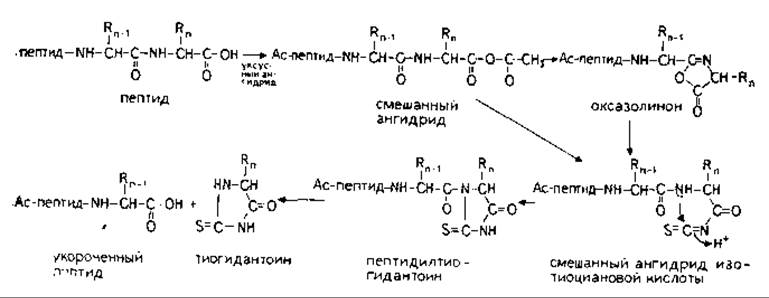
FIG. 18.9. Cleavage of Peptides and Proteins using thiocyanate [83].
Last update: 06/08/2026
Editorial and Educational Adaptation: This material has been compiled based on the primary/original source text. The project team performed an editorial review, corrected technical inaccuracies, structured sections, and adapted the content for an educational format.
What was processed:
- elimination of formatting defects (OCR errors, structural breaks, corrupted characters);
- editorial organization of content;
- standardization of terminology in accordance with academic sources;
- verification of factual statements against the original source text.
All mentions of the author, publication year, and origin of the primary text have been preserved in accordance with the source.